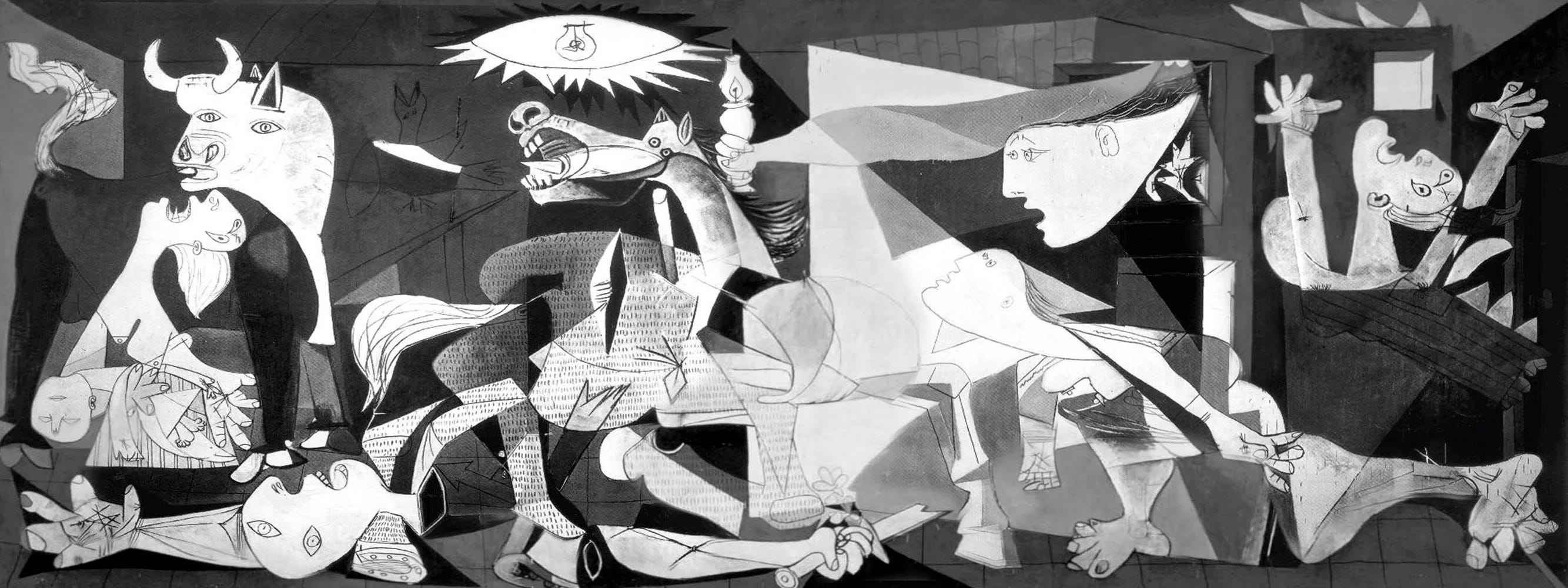
Guernica in the Age of the Algorithm
Welcome to the Theater of Disinformation—Streaming 24/7 in High Definition
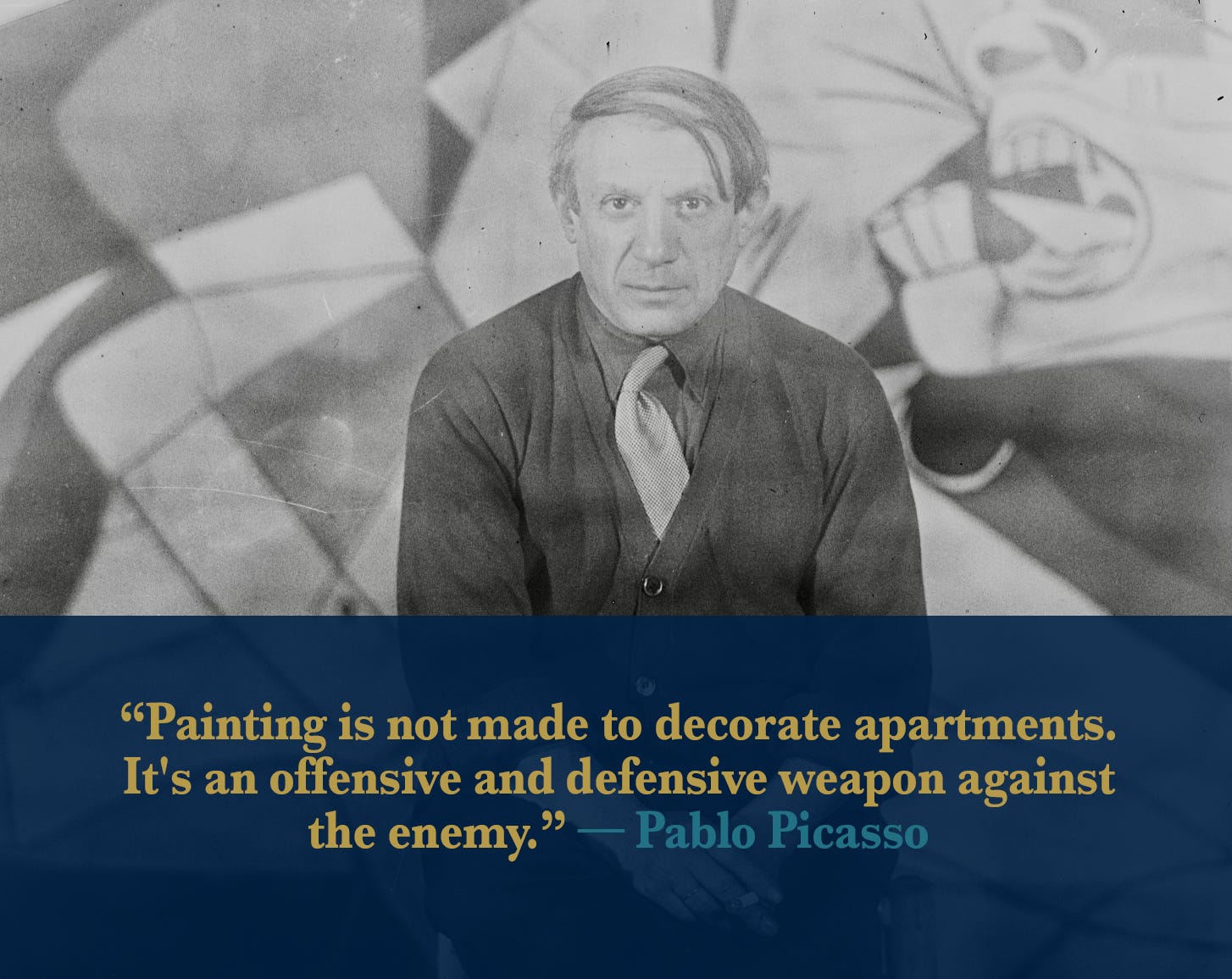
In the 20th century, Picasso’s Guernica bore witness to a massacre the fascists denied. It did not depict a hero. It offered no moral clarity. It simply screamed. It was a rupture — a wound on canvas — a record of truth that refused to disappear, and the world was listening.
But today, truth doesn’t just vanish, waiting for someone to uncover it. It dissolves into media-saturated pools of liquid. This is the realm of the fields of semiotics and media studies, which investigate the subliminal use of signs and symbols in our culture and study the ways that human communication, filtered by media networks have blurred the lines between the real and the simulated.
We’re confronted by a deluge of lies and half-truths. Signs, symbols, and mediated communication in modern cultures have been detached from their original references, and the boundaries between the real and the simulated have all but evaporated. And what we see is a society described in the 1980s by the philosopher Jean Baudrillard, where violence does not shock - it trends, loops and dissolves into liquified aesthetic fragments.
Today abstraction is no longer that of the map, the double, the mirror, or the concept. Simulation is no longer that of a territory, a referential being or substance. It is the generation by models of a real without origin or reality: A hyperreal. The simulacrum is never that which conceals the truth—it is the truth which conceals that there is none. The simulacrum is true. — Jean Baudrillard, Simulacra and Simulation
In this world, retribution is no longer a covert act of power — it is a performance of dominance, repeated for the camera, the crowd, the algorithm.
No longer hidden—revenge is performed, streamed, and reinforced by the algorithm. We are not silenced. We are fed so much spectacle that we forget how to hear. And nowhere is this clearer than in the political theater of Donald Trump.
Having already fired or threatened dozens of civil servants, prosecutors, and journalists, President Trump has now escalated his campaign of retaliation into the legal, academic and cultural arenas: launching lawsuits against major media organizations, vowing to investigate his political enemies, taking extreme measures to defund or dismantle institutions that preserve cultural memory. The targets are not just political opponents — they are witnesses, archives, methods of research, symbols of dissent. The goal is not merely to punish, but to defund and erase.
Michel Foucault understood this terrain long before social media: power no longer needs to hide. It only needs to observe, record, and discipline. In a world of total visibility, the individual is transformed into data, not subject — and control is exerted through dominating the media, surveillance, and demonstrations of authority. This appears to be playing out in America today.
“There is no need for arms, physical violence, material constraints. Just a gaze. An inspecting gaze… that each individual under its weight will end by interiorizing to the point that he is his own overseer.” – Michel Foucault
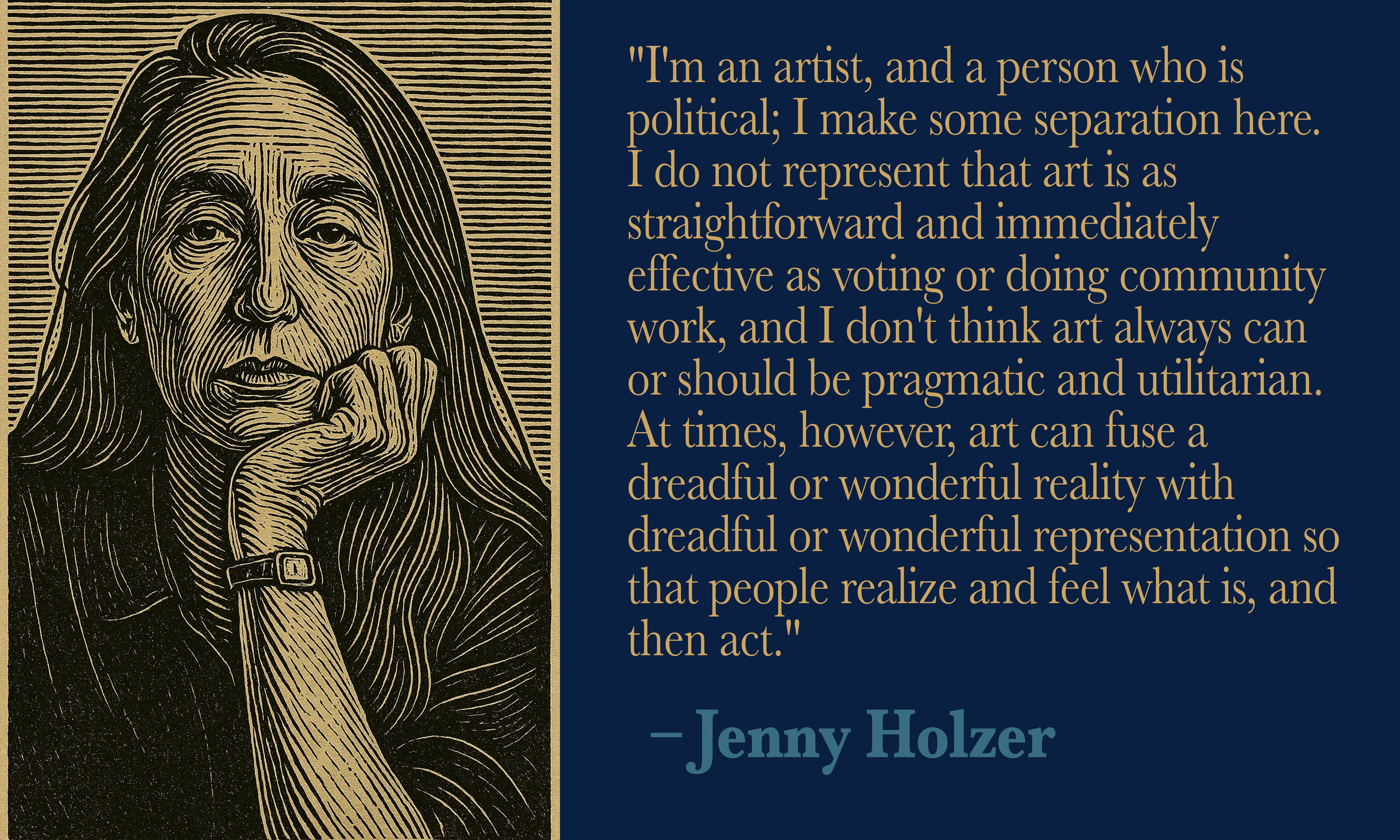
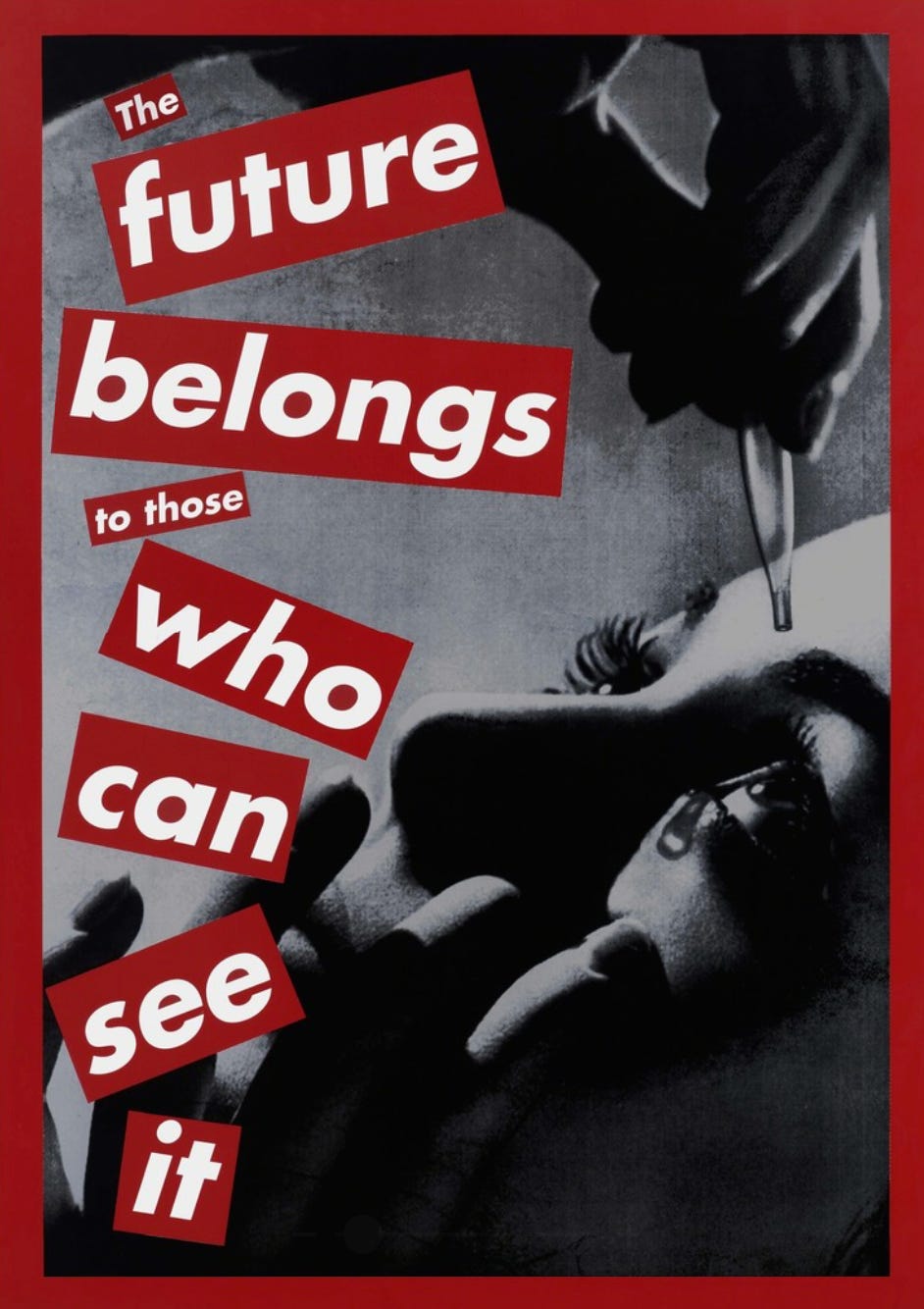
Artists like Barbara Kruger and Jenny Holzer foresaw this flattening of meaning. Their bold text works — projected, printed, etched — confront us with statements that feel prophetic now:
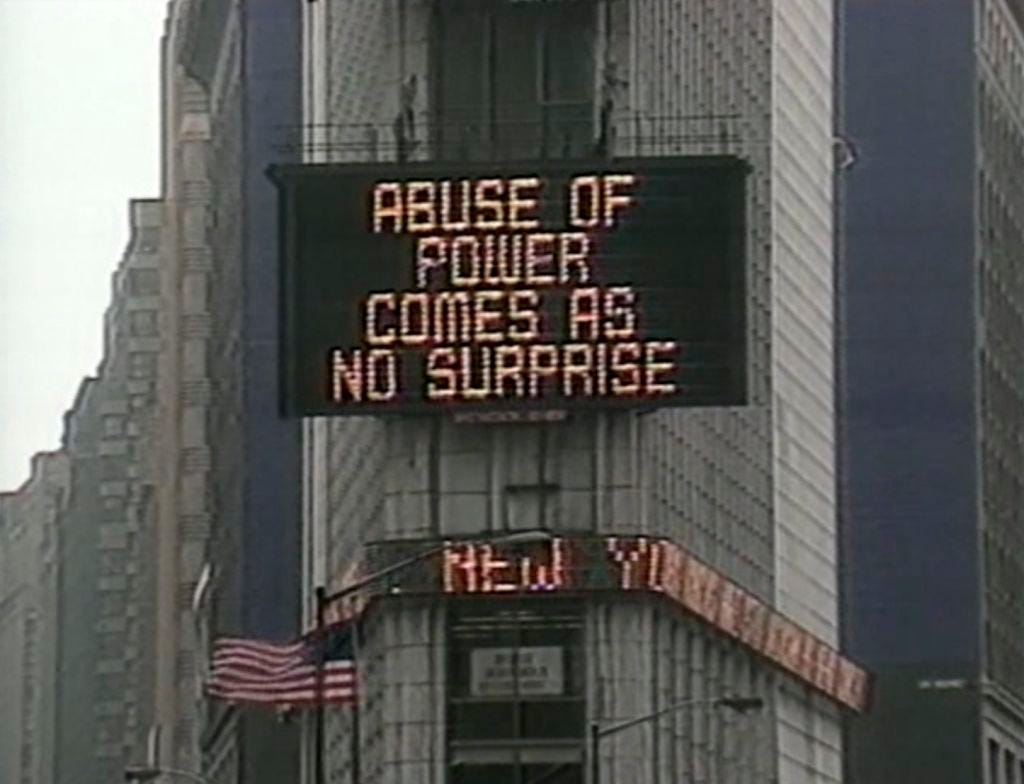
In today’s surveillance economy, individuals are no longer just watched.
They are rendered into data sets — You are not just a person, you’re a behavior pattern. You are not a citizen, you are a predictive risk model, a target segment, part of a content feed, pulled into an AI chat.

And nowhere is this clearer than in the political theater of Donald Trump.
Retribution is no longer hidden away somewhere—it is performed, streamed, and reinforced by the algorithm. We are not silenced. We are fed so much spectacle that we forget how to hear. Those with enough courage are provoked to respond.
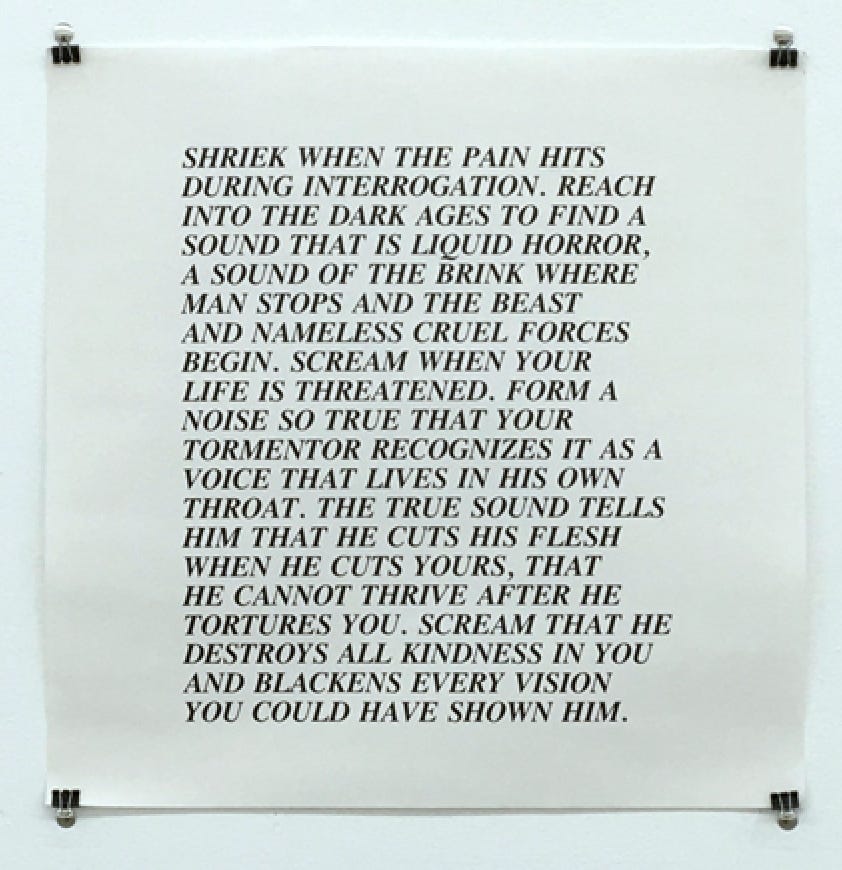
Is this fascism, or is it is something newer, sleeker, harder to name—a hyperreal authoritarianism, where violence is symbolic, punishment is performative, and truth is not erased, but rendered useless.
If Guernica was a loud awakening in the 20th century, perhaps today’s murals are coded in memes, in counter-narratives, in encrypted testimonies scattered across the network.
So yeah. Against forgetting, we write. We protest, and make our own signs. Against distortion, we speak, we create. Against spectacle, we remember. Guernica still burns. But now it flickers in code, in the dark glow of the network, on computer screens everywhere.
“The Party told you to reject the evidence of your eyes and ears. It was their final, most essential command.”
— George Orwell, 1984
“With the destruction of history, contemporary events themselves retreat into a remote and fabulous realm of unverifiable stories, uncheckable statistics, unlikely explanations and untenable reasoning.”
— Guy Debord, Comments on the Society of the Spectacle