

Abstraction On Display
This season's art shows exhibit the best of the genre

What art buyers want changes and transmogrifies through the early part of this century. New audiences and buyers with different tastes account for much of the transformation. While the art market writ large has been declining in recent years, abstract art, which makes up over 30% of contemporary art sales, currently enjoys a 15% annual growth rate (MyArtBroker). Gen Z and millennial buyers are spending an increasing amount, more than 26% of their total spending on art and other collectibles (Artnews).
The Season’s Abstractions
Here’s a look at some of the bigger shows getting attention this season.
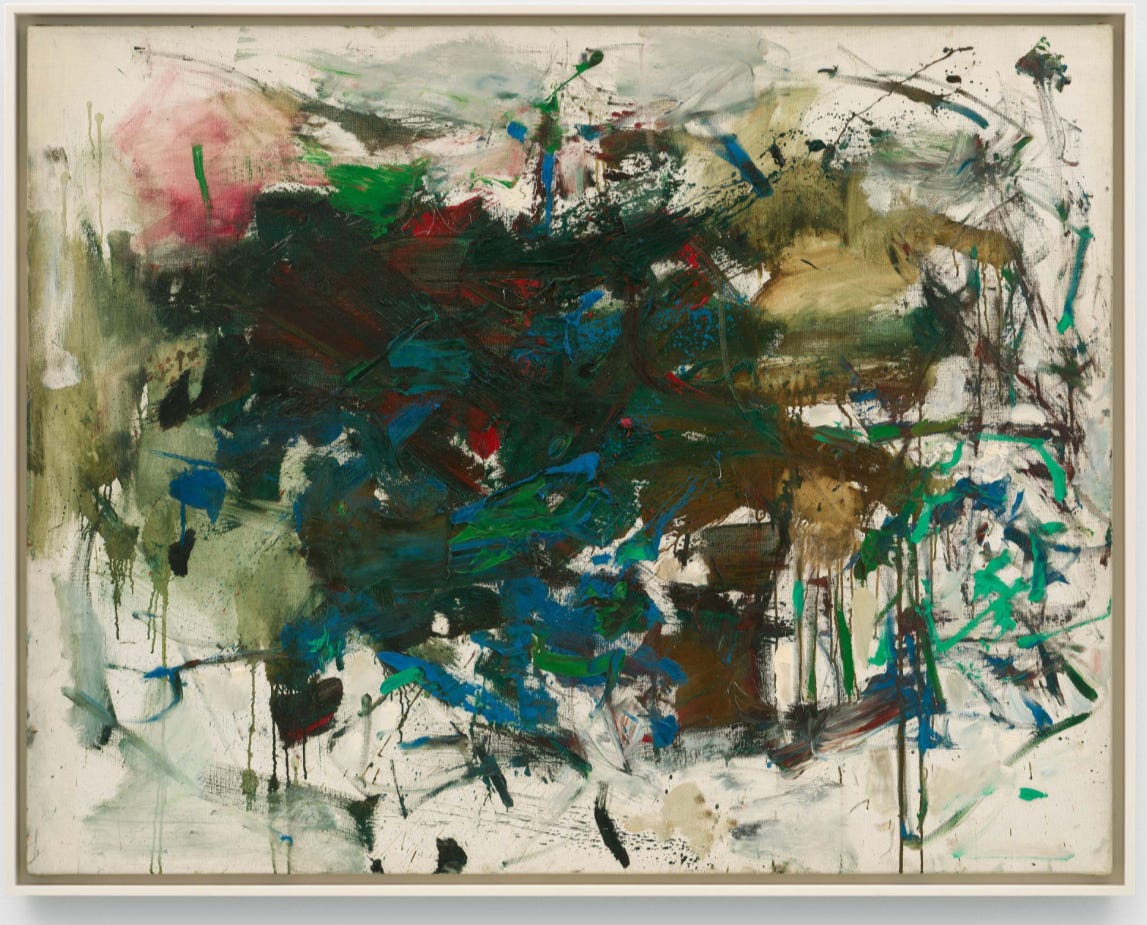
In New York, David Zwirner closes out Joan Mitchell’s centennial year with To define a feeling: Joan Mitchell, 1960–1965 (through December 13, 2025), a focused examination of the artist’s Mediterranean period. During this time Mitchell created dark, central masses of swirling brushstrokes in deep greens, blues and white to partially obscure rich tonal colors embedded beneath, creating what poet John Ashberry described as “an unhurried meditation on bits of landscape and air.” Mitchell painted these turbulent canvases aboard a sailboat touring France’s Côte d’Azur with painter Jean Paul Riopelle, translating not the water itself but “its walls—the trees at water’s edge and the limestone bluffs of Corsica, sun-bleached and studded with scrub and cypresses.” Back in her Parisian studio, Mitchell drew on the experience of looking out at the water, horizon, and rocky coasts, resulting in paintings that depart radically from those of the preceding years. (The Joan Mitchell Foundation)
At the Guggenheim Museum in New York, Gabriele Münter finally receives her due with “Contours of a World” (through April 26, 2026), the German Expressionist’s first solo exhibition in New York. Münter was a romantic partner of Wassily Kandinsky who, together with Franz Marc and August Macke, co-founded Der Blaue Reiter (The Blue Rider). a loose collective dedicated to exploring color’s expressive and spiritual potential.
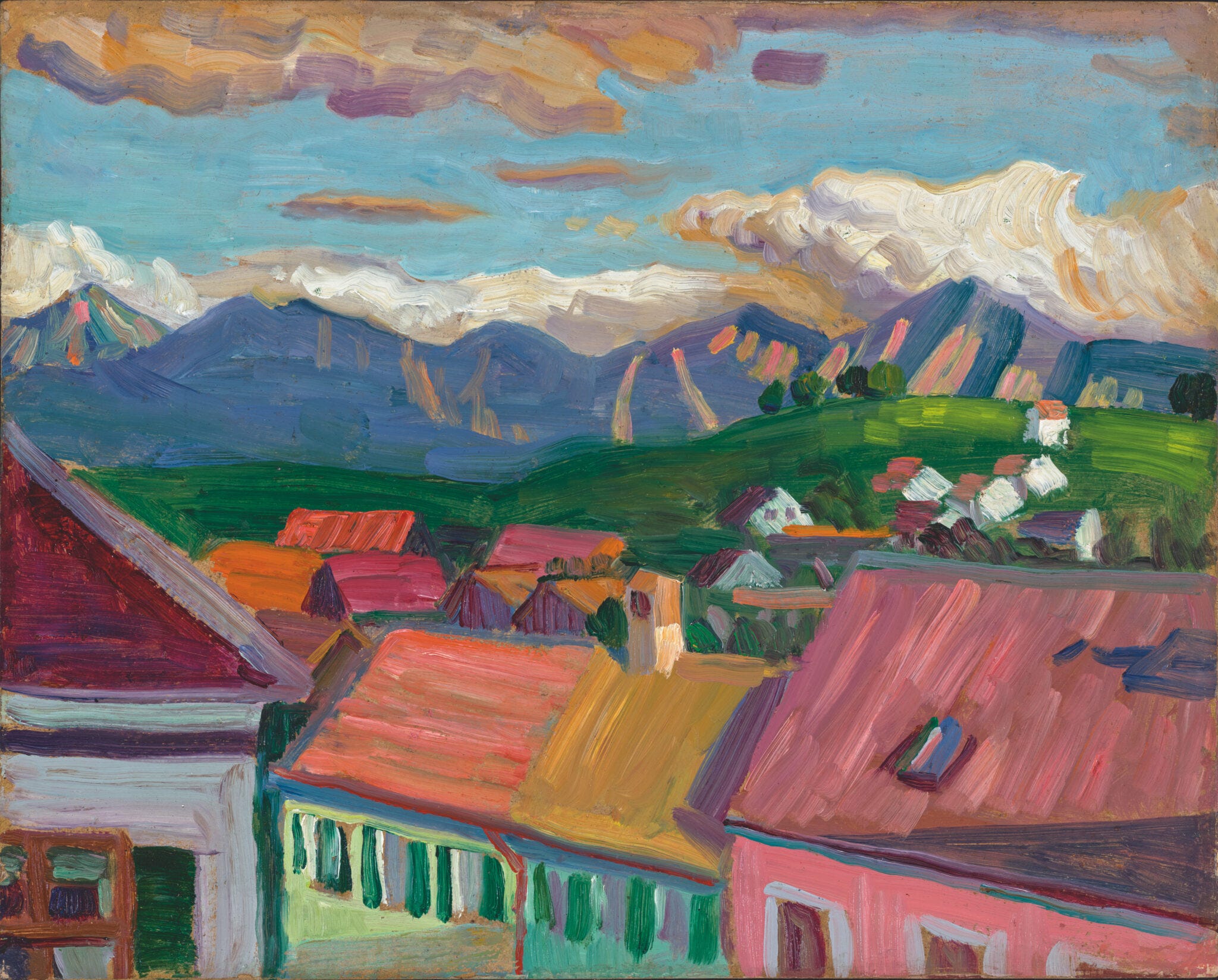
Her early canvases reflect a radical approach to color and form and she translated the discoveries of the avant-garde into the realm of everyday life.
On through January 18th the Guggenheim Museum presents Rashid Johnson’s largest survey in a decade, “A Poem for Deep Thinkers.” The exhibition will explore themes of alienation, rebirth, and escapism through Johnson’s wide-ranging practice, with a monumental, site-specific sculpture and new film installations anchoring the rotunda.
A Poem for Deep Thinkers is a thematic exhibition spanning 100 years of contemporary Indigenous art. Johnson draws from history, philosophy, literature and and music. This major solo exhibition highlights Johnson’s role as a scholar of art history and a mediator of Black popular culture.
Johnson draws from an array of disciplines such as history, philosophy, literature, and music. This major solo exhibition highlights Johnson’s role as a scholar of art history, a mediator of Black popular culture, and as a creative force in contemporary art. There is a companion performance program with the exhibition featuring community partners featuring spoken word, music and live art events.
An Indigenous Present
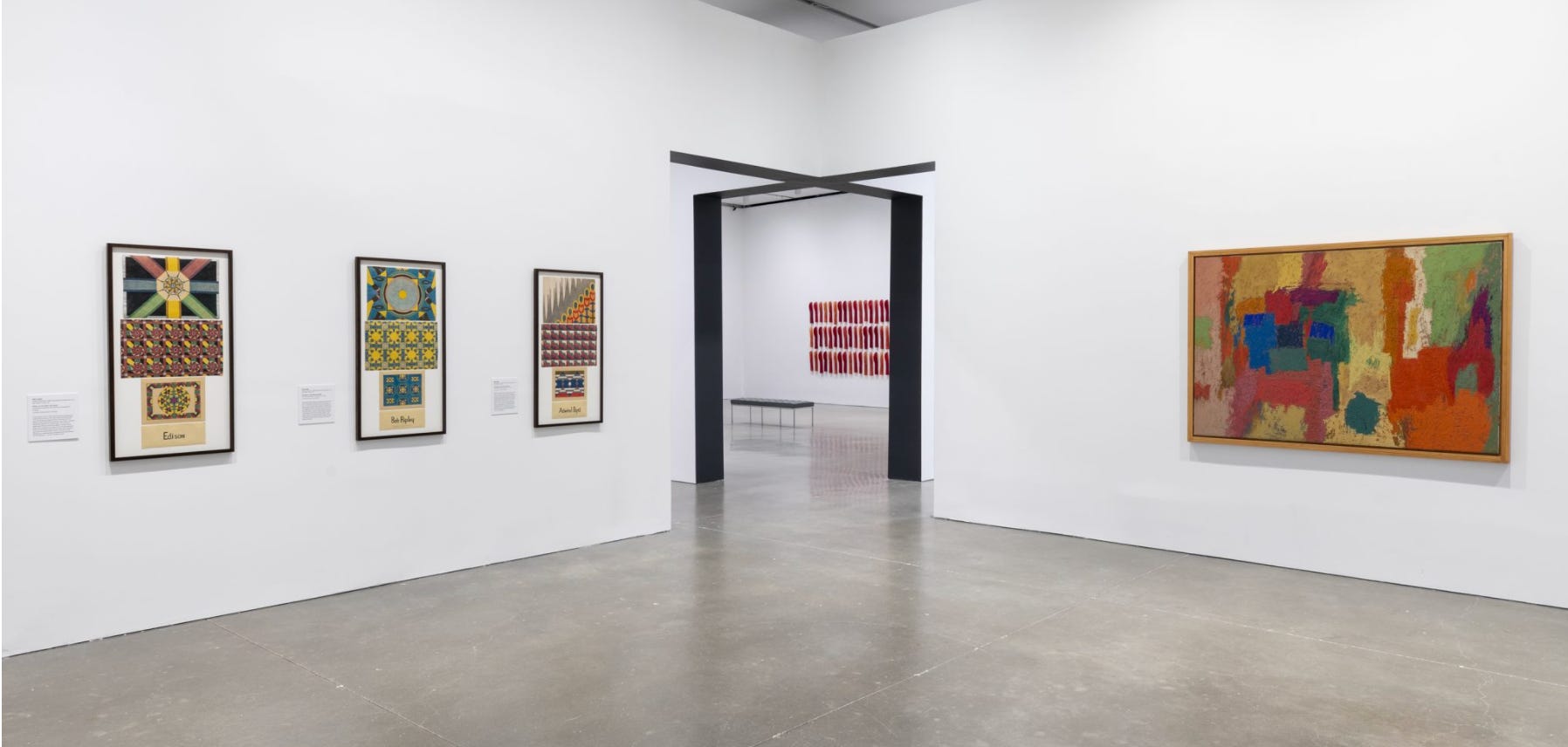
Co-organized by artist Jeffrey Gibson and independent curator Jenelle Porter, the exhibition offers an expansive consideration of Indigenous art practices that emerges from Gibson and Porter’s 2023 book of the same name, which brought together work by Native North American artists exploring diverse approaches to concept, form, and medium.
“This exhibition is one take on the field of contemporary art and culture by Native and Indigenous makers. Some of these artists have been working for decades, and I follow in their path; others are at an earlier stage in their careers, and I see new routes and possibilities in their respective practices. Together, they are amplifying the histories that have come before them and building a new context for present and future artists.” – Jeffrey Gibson, ICA Boston
Thank you for reading Metaculture!